
JG Ballard
Last week I added a wonderful movie to my iTunes library - Empire of the Sun. The film was based on a book byJ.G. Ballard who sadly passed away last Sunday (April 19, 2009) at the age of 78. Ballard based the “Empire of the Sun” on his () in a World War II internment camp outside of Shanghai. Many photos and a video of J(ames) G(raham) Ballard’s original home - 31A Amherst Ave Shanghai, China. Shanghaiist has a write up > HERE
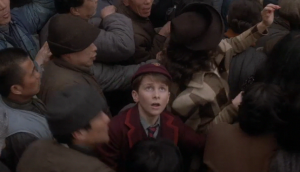
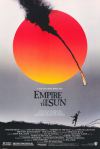
This 1987 film was directed by Steve Spielberg and starred John Malkovich. It was also the very first role for Christian Bale who delivered an amazing performance. Bale plays young James Graham, who is separated from his parents during the 1941 Japanese invasion of Shanghai. The 12-year-old Graham goes from living a life of privilege to becoming a prisoner of war in a Japanese internment camp in Lunghua, China. The film has many poignant moments and I highly recommend it. See > video trailer.
The Empire of the Sun has some personal meaning for me. My uncle, Lud Lozier, flew B-24D Liberator missions from India to China. In May 1942, the Japanese captured the Burma Road, the only ground route available to supply Chinese forces. As a result, B-24 transport units had to fly over the Himalayas from airfields in India to China. My uncle flew many of these “over the hump” (Himalayas) missions and recounted how bitterly cold it was flying at 30,000 ft. His flight jacket and hat were all he had to keep warm. No heated/pressurized cabins like we enjoy in today’s aircraft. When the B-24s dropped down into China, they were vulnerable to Japanese fighter attack. Hence they were often joined by AAF P-40s Warhawk fighters who would escort them safely into China. Many of these P-40 fighter pilots were part of the original American Volunteer Group (AVG) … also known as the “Flying Tigers.”
The Flying Tigers were originally a non-military, non-government flying unit contracted to assist the Nationalist Chinese in their fight against the Japanese invasion of China. Most of the Flying Tigers’ fighter pilots were Americans. In 1940 the US was officially neutral to the Sino-Japanese war, but President Franklin Roosevelt (FDR) wanted to help the Chinese and FDR transferred a number of P-40 Warhawk fighters to India. And so the Flying Tigers unit was born.Later on in WWII, a number of the Flying Tigers pilots were assimilated into official US squadrons.
The 118th Tactical Reconnaissance “Black Lightening” Squadron, which flew fast and nimble P-51C Mustangs, were involved in a number of missions against Japanese positions and airfields in China.
In the Empire of the Sun there is a powerful scene where members of the Black Lightening Squadron attack the Japanese airfield at Lunghua, China. The airbase is adjacent to the Japanese internment camp where the young Jim Graham and fellow expats are being held prisoner. Jim has a passion for military aircraft, and ignoring all danger, he races to the top of a building to watch the American fighter pilots strafe the airfield. Jim is overwhelmed when an American fighter pilot zooms by in his P-51 and screams at the top of his lungs “P-51 Mustangs …the Cadillac of the sky!”
There is one other personal moment I’d like to share about the Flying Tigers. About the same time that Empire of the Sun was released to theatres (1987), I happened to be running in a race in Reno, Nevada. In those days I was fleet of foot and very skinny (ah memories). I also was the proud owner of numerous Flying Tigers memorabilia. My friend Randy happened to be a pilot for Flying Tigers Freight Line and he had given me many of his t-shits with the Flying Tigers logo and depictions of P-40 fighters. Well the morning after the Reno 5K race, I went to breakfast at an all you-can-eat casino buffet with a group of my running buddies. I was wearing a colorful Flying Tigers t-shirt. As I was standing in the buffet line, I happened to notice an Asian family sitting at a nearby table. They seemed to be staring intently in my direction. As I made my way down the buffet I looked back once or twice more and it was apparent that the family was indeed paying close attention to me. Yet I had no idea why? I noticed that the parents, appearing to be in their 70s, seemed to be quite emotional. A few moments later the Asian son got up from the table and approached me. He was polite and almost apologetic as he spoke; “Excuse me, I am sorry to interrupt your breakfast, but I was wondering about your shirt? … Did your father fly for the Flying Tigers?”
I explained that he did not, but my uncle flew in WWII and knew a number of the original American Volunteer Group pilots. The Asian son did not want to interrupt me any further so he thanked me and turned to leave. I stopped him before he could walk away; “Wait … I’m curious, why did you come over to ask me about the Flying Tigers?”He responded; “Well, my parents saw your shirt and they remember the American pilots very well. You see, they were held captive in China by the Japanese. They are very grateful to the Americans and the Flying Tigers. Your shirt brought back many memories for them. It is very emotional for them.”
That brief encounter had a big impact on me. I will never forget that family. It brought home in a personal way how much the Flying Tigers meant to the lives of so many who struggled to survive under the most austere circumstances. Something to think about when we bemoan our present day lives. ??
Empire of the Sun (1987) pilots:
Hoof Proudfoot…. aerial unit mustang pilot
Mark Hanna …. aerial unit mustang pilot
Ray Hanna …. aerial unit chief mustang pilot (P51 pilot of “Tugboat” who waives at Jim – Christian Bale)
Tom Danaher …. aerial unit chief zero pilot
Ray Hnna – 1928-2005